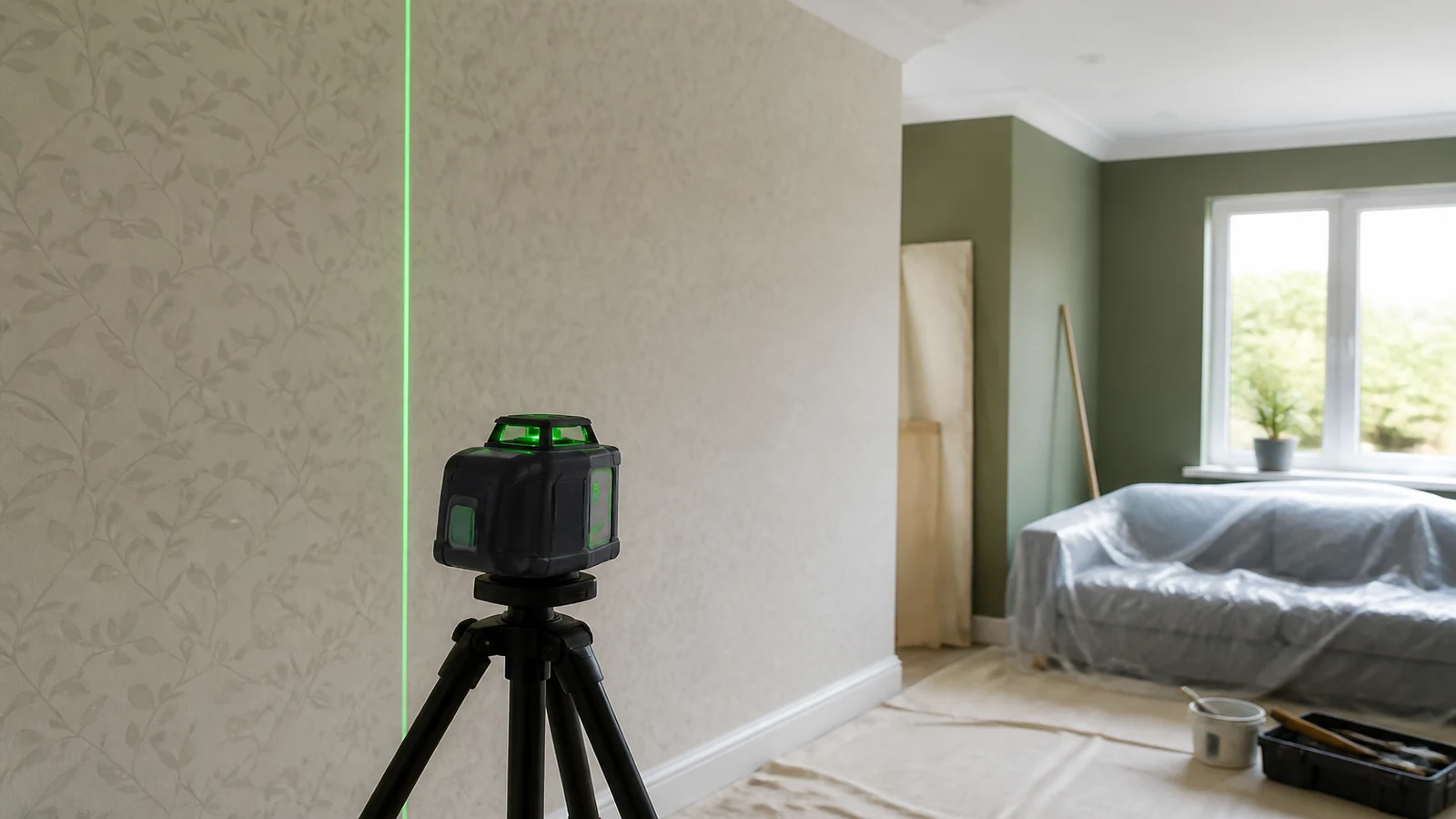
Laser level for wallpapering UK: keep every drop plumb
Direct answer: use a self-levelling vertical or cross line as the plumb reference for the first wallpaper drop, then return to it whenever you check pattern alignment. A 360° horizontal line is useful for a repeating horizontal motif or a rail-height reference, but the vertical line does the essential job. It gives you a consistent guide; it cannot make a bowed wall flat or replace normal wall preparation.
Why the first drop matters more than the next ten
Wallpaper can appear to follow a skirting board and still wander across a room if the first drop is not truly plumb. Start from the most visible focal point or from the manufacturer’s recommended starting position, rather than assuming an older wall or trim piece is straight. A laser lets you see the reference over the full height of the wall while both hands are free to position the paper.
That is the role described in The Creative Walls’ wallpaper laser-level guide: the beam is a straight vertical edge guide, not a substitute for careful measuring or seam work.
A practical set-up for one wallpaper drop
- Choose the starting edge. Measure the paper width and mark the side of the first drop. Avoid starting against a visibly out-of-plumb corner if the pattern will make the lean obvious.
- Stabilise the laser. Put it on a tripod, shelf or secure mount where people will not knock it. Let a self-levelling model settle before marking anything.
- Align the vertical beam with the mark. Confirm that the beam stays clear of your paste table and working area.
- Hang the first drop to the beam. Work from the top down, lightly positioning before smoothing. Check the paper edge against the beam at several points rather than only at the ceiling.
- Use the first drop as the pattern reference. Match subsequent drops to the paper, then use the laser again if the pattern begins to drift or the wall changes direction.
Cross-line or 360°: choose by the room, not the label
| Wallpapering situation | Most useful line pattern | Why |
|---|---|---|
| One feature wall or a single run | Vertical or cross-line | It gives a plumb edge for the first drop without extra set-up. |
| A long room with a horizontal motif | Cross-line or horizontal 360° | A horizontal datum makes it easier to judge whether the pattern course is visually carrying around the room. |
| Several connected walls | 360° or multi-line | The guide can stay visible around corners, reducing repositioning. |
| Outdoor work or a ground-level layout | Neither as a default | That is a different job: consider an outdoor-capable system and receiver instead of buying lines you will not use indoors. |
If you are deciding between those indoor formats, our cross-line versus 360° guide explains the trade-off in set-up moves and working area.
Use a horizontal line only when it answers a real question
A horizontal beam can be helpful when the wallpaper includes a stripe, a border, or needs to relate to a picture or dado rail. UK DIY guidance also uses laser levels to transfer level lines for interior details; DIY Doctor’s laser-level guide is a useful reference for that kind of layout work. Do not force a pattern to follow a crooked existing rail just because it looks familiar—choose the visual datum deliberately.
Two quick checks before you paste
- Step back a few metres and look at the beam against the ceiling line, door frame and main furniture sightline. Decide which visual reference matters most in that room.
- Turn on normal room lighting. If the beam is difficult to see, change its position or reduce glare before you begin; do not rely on a line you can only see intermittently.
When not to buy a laser for this job
For one small picture or a single short length of paper, a long spirit level and a pencil line may be quicker to fetch and perfectly adequate. A laser earns its place when you need an uninterrupted plumb reference over a tall wall, across several drops, or around more than one wall. For a renovation that also includes floor and wall layout, see what a 4D/16-line format is actually for before paying for extra planes.
FAQ
Do I still need a plumb bob?
Usually not for routine wallpaper drops if you have a reliable vertical laser reference. A plumb bob remains a simple backup where there is no suitable place to set a laser or where a bright beam cannot be seen clearly.
Will a green beam make wallpapering easier?
It can be easier to see in some bright interiors, but visibility depends on the room light, the wall finish and the individual tool. Test the line at working height before you start pasting.